Classroom Resources
Bring liverworts into your classroom with ready-to-use lessons, teacher tools, and playful activities. From worksheets and modules to scavenger hunts, badges, and virtual explorations—discover creative ways to make liverworts come alive for students of all ages.
Explore Our Videos
Engage with scientists through videos that bring to life the process of fieldwork, research, and curation of liverworts and hornworts. Join scientists as they journey through the forests of southern Chile, documenting the remarkable diversity of mosses and liverworts. Follow the process from the field to the Field Museum, and gain insight into how field collections become part of global biodiversity research through a series of video journals
Video Journal 1 : Expedition Overview--Early Land Plants of Chile
Check out some of Chile's amazing liverworts, hornworts, and mosses, watch how the team collects these bryophytes, and get a brief overview of the team's mission.
Watch Video Journal 1Video Journal 2 : Packing up in Punta Arenas
Check in on Laura and her team members as they prepare to pack up and ship out from the port at Punta Arenas, Chile.
Watch Video Journal 2Video Journal 3 : Heading out to Sea
Trace the travels of Charles Darwin as you sail through the Beagle Channel with Laura—and her dolphin escort!
Watch Video Journal 3Video Journal 4 : Touring the Ship
Tag along with Laura as she tours the Don Jose Miguel, and find out what it's like to live and work aboard a crab-fishing boat during a scientific expedition.
Watch Video Journal 4Video Journal 5 : Horseback Riding to the Serka Glacier
Prepare yourself for spectacular views of the Serka Glacier as you saddle up and head out on horseback to collect liverworts, hornworts, and mosses with Laura.
Watch Video Journal 5Video Journal 6 : Lamb Roast!
Enjoy a brief moment of camaraderie around the campfire as Laura and her colleagues take a break from collecting specimens to share a meal of spit-roasted lamb.
Watch Video Journal 6Video Journal 7 : Drying Specimens
Find out how scientists prepare and store so many specimens aboard ship as Laura demonstrates the team's handy-dandy plant dryer.
Watch Video Journal 7Video Journal 8 : Fieldwork
Join Laura and her colleagues as they board inflatable Zodiacs and make a beach landing on Isla Nueva—where they're shocked to find a surprising amount of bryophyte diversity scattered among the remnants of human disturbance!
Watch Video Journal 8Video Journal 9 : New Discoveries
Get a glimpse of gorgeous Southern Beech (Nothofagus) forests absolutely coated with bryophytes, and witness Laura's discovery of what may be a new liverwort species.
Watch Video Journal 9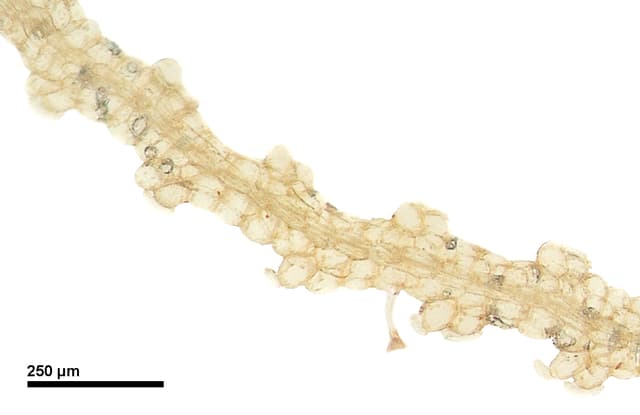
LivLINK Fact!
Some liverworts are so tiny they are less than 1/4th of a mm wide and in some cases even look like a bug or invertebrate animal. In this case the genus name is even called Zoopsis because of its animal-like appearance.
Lesson Plans & Activities
Ready-to-use modules for all levels, from Grade 4 plant structure lessons to middle school biodiversity and biomimicry projects, plus university-level modules in evolution and taxonomy.
Plant Structure and Function: ThingLink Digital Version
Elementary-aged students will learn about the functions of plant parts and use models to gain an understanding of plant anatomy. This knowledge will be applied towards understanding the differences between plants who make seeds and plants who do not. This lesson includes a digital activity that highlights plant specimens from the Field Museum. TYPE: Lesson Plan AGE: Grade 4
Students | Grade 4
Biodiversity and Ecosystems
Biodiversity and Ecosystems Middle school-aged students will investigate the differences between native and invasive plants and demonstrate their learning by creating a model of a native plant garden.
Students | Grades 6 - 8
Plant Biomimicry
Middle school-aged students will demonstrate their understanding of biomimicry by designing a solution to a human problem using plant-inspired ideas.
Students | Grades 6 - 8
Adventures in the Herbarium: Pixels and Petals
The importance and impact of Field Museum's African flowering plant specimens are highlighted in two podcasts. These podcasts were written, recorded, and edited by two college interns who worked alongside experts and collections specimens. Pixels and Petals highlights the digital imaging process and the impact of herbarium specimens.
Podcast | General Public
Adventures in the Herbarium: Museums and Medicines
The importance and impact of Field Museum's African flowering plant specimens are highlighted in two podcasts. These podcasts were written, recorded, and edited by two college interns who worked alongside experts and collections specimens. Museums and Medicines highlights the impact plant specimens have had on human health and why their conservation is so important.
Podcast | General Public
Digital Herbarium Tour
Take a peek at the specimens and people who work behind the scenes in the herbarium here at Field Museum! Learn about our collections, digitization process, and the history behind the herbarium. This tour can be translated into over 60 different languages and includes and immersive reader for visually impaired users.
General Public
Botanical Timeline
Travel back in time to discover how plants changed the face of this planet, forever!
General Public
Herbarium Behind the Scenes Tour
Go where others can't, and explore our botanical collections at the Field Museum of Natural History.
General Public
Nachusa Grasslands
Travel approximately 3 hours west of Chicago to the Nachusa Grasslands. Learn about the different topographical features of this area, and explore the different plants you can find here.
General Public
Teacher Tip!
Pair classroom lessons with a Digital Herbarium Tour or Botanical Timeline interactive so students can see real specimens in action.